

If you’re selling on Amazon, there’s a good chance you’ve been checking your Best Sellers Rank a lot more than you’d like to admit. Watching the number drop feels like progress, while seeing it suddenly climb sends most into outright panic.
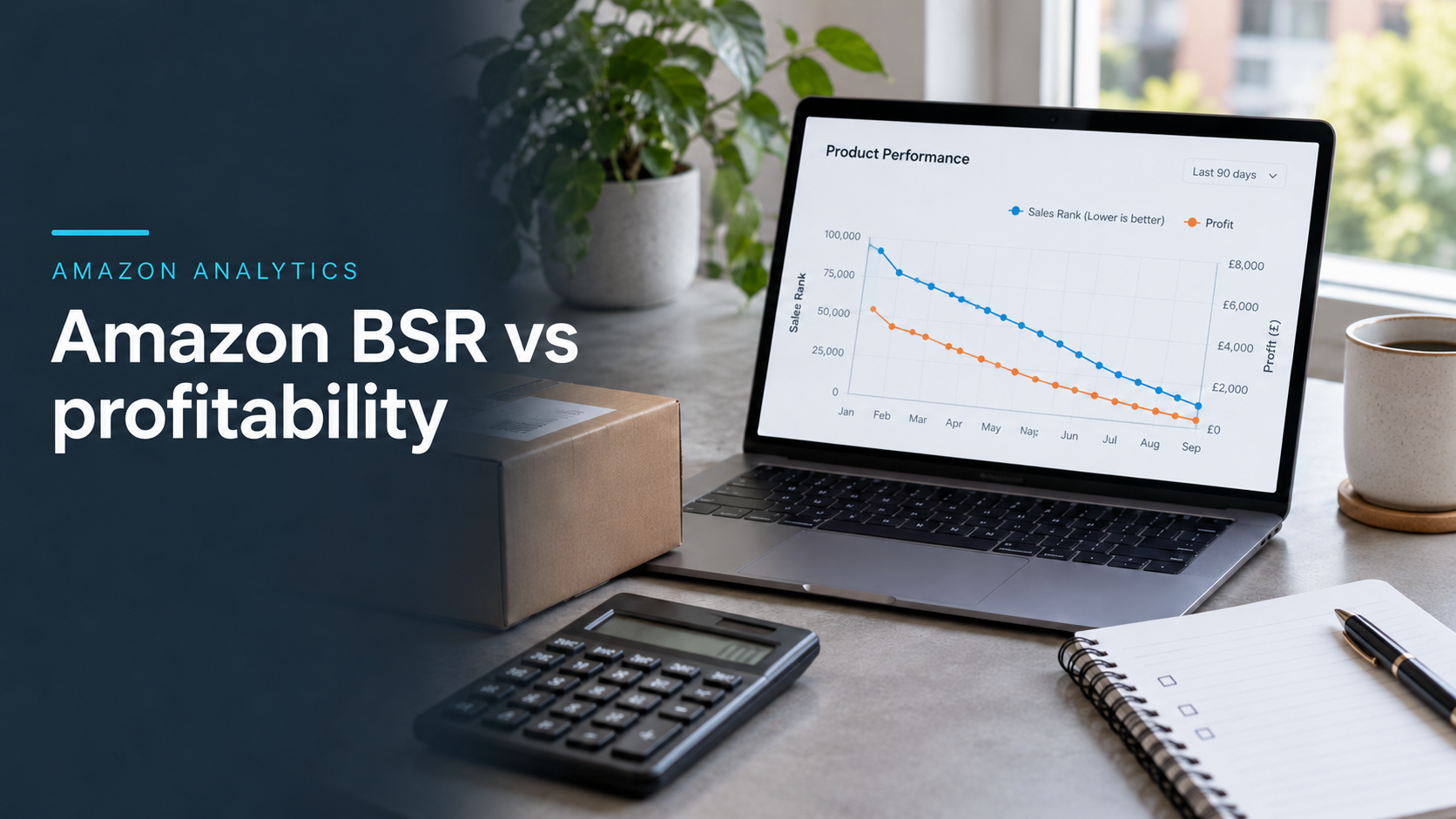
The problem is, BSR doesn’t actually tell you if your Amazon business is performing well and is actually one of the most misleading metrics on the entire platform.
That doesn’t mean BSR is completely useless; you just need to know what it’s actually telling you.
What Does Amazon BSR Actually Measure?
Best Sellers Rank shows where a product currently sits within its category or subcategory and is based largely on recent sales activity. The lower the number, the stronger the current sales velocity.
The important word there is current.
BSR is updated regularly and gives more weight to recent sales. A product having a strong day can therefore have an excellent BSR even if its longer-term performance isn’t particularly impressive. Equally, a successful product can see its BSR decline extremely quickly simply because it hasn’t generated that many sales over the last few hours.
Why BSR Can Be Misleading
One of the biggest problems with BSR is that it tells you nothing about profitability. You could achieve an excellent rank just by heavily discounting a product and spending aggressively on Amazon ads, while at the same time making very little actual profit from the sales you’re generating.
Comparing BSR between different categories isn’t particularly useful either. A rank of 500 could be excellent in one category and fairly average in another.
Then there’s the constant movement. Because older sales gradually carry less weight, your BSR can get worse without anything being wrong with the listing. Reacting every time that happens can lead to unnecessary changes when there isn’t really a problem to fix in the first place.
BSR Doesn’t Tell You Why Performance Changed
Even when a meaningful change does happen, BSR won’t explain what’s behind it.
Your rank could be declining due to a stock issue, price change, advertising adjustment or stronger competition. The number itself gives you none of that information.
That’s why making decisions based purely on BSR is extremely difficult and isn’t recommended. You might know sales velocity has changed, but you still need to look elsewhere to understand what’s actually happening and whether you need to do anything about it.
When Is Amazon BSR Actually Useful?
All that being said, there are still times where BSR can provide useful information. Product research is one of them, in particular when you’re trying to understand whether there’s enough demand within a niche before launching something new.
It can also be useful when comparing your product against direct competitors within the same subcategory. However, rather than just looking at where everybody happens to rank today, start looking at the trends over a longer period.
The same applies to your own products. A 30-day BSR trend can tell you far more than whatever number happens to be showing when you last checked seller central.
What Should You Be Looking at Instead?
If you’re trying to understand how your Amazon business is actually performing, there are far better tried and trusted metrics available.
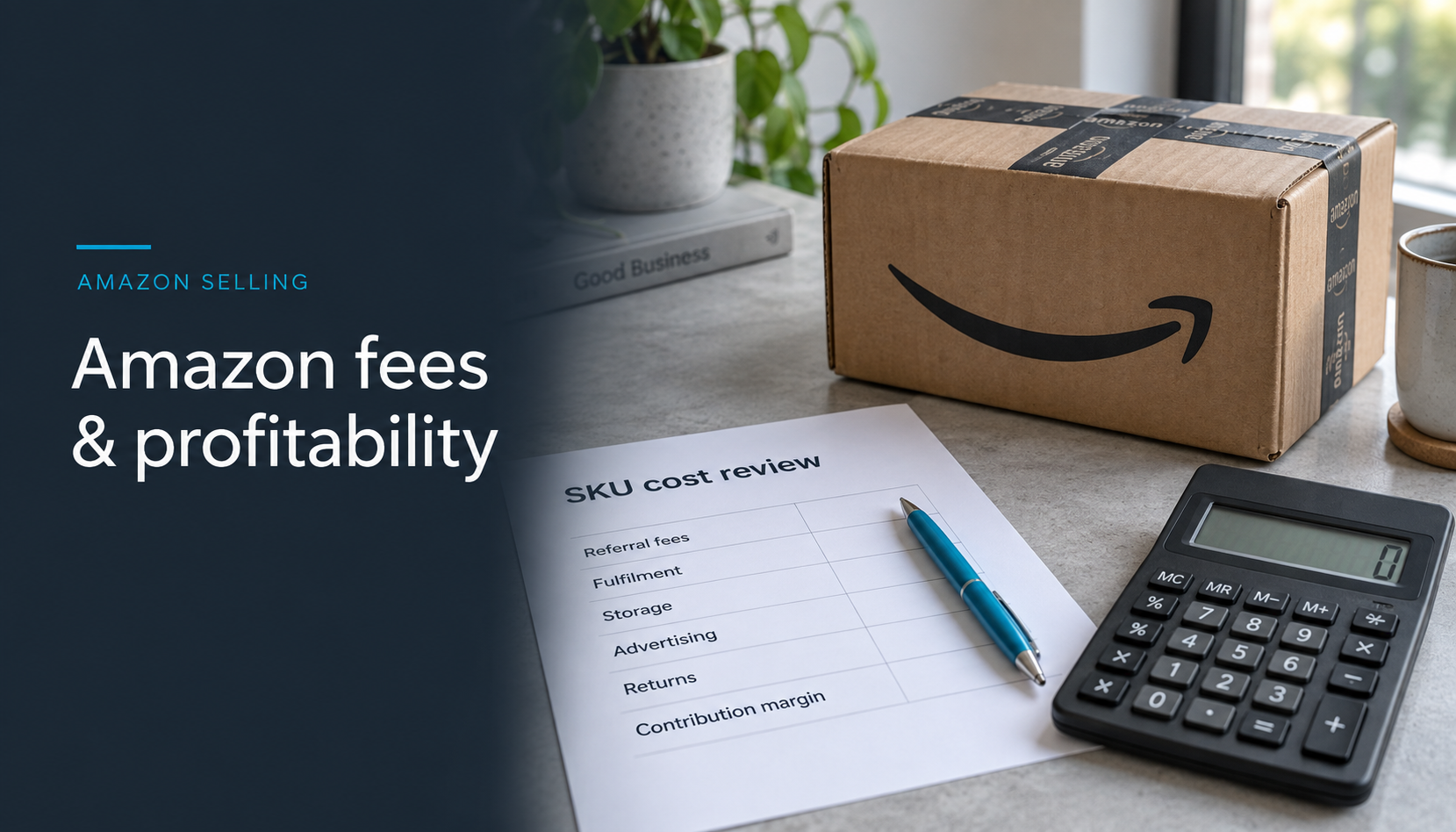
Click-through rate and conversion rate will help show where performance may be breaking down, while TACoS gives you a better view of advertising against total sales. Returns also need monitoring, and ultimately you need to understand the contribution margin being generated by each SKU.
BSR still has its uses, but it shouldn’t be the number you’re using to decide whether your Amazon business is doing well. It tells you what’s selling recently. It doesn’t tell you whether those sales are actually making you money.