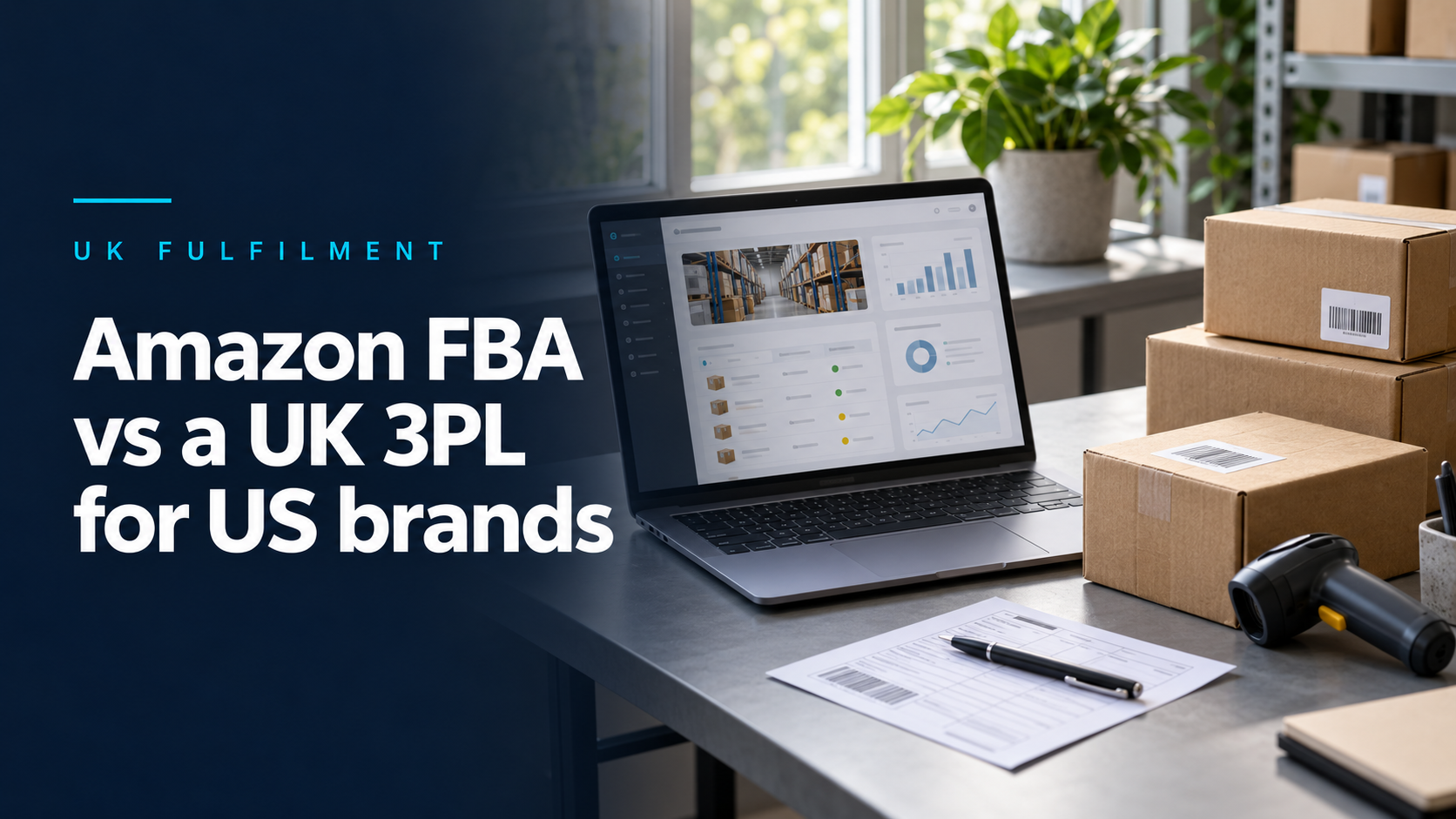

Deciding how you’re going to fulfil orders is an important part of any Amazon UK launch. When comparing Amazon FBA vs 3PL fulfilment, you need to look beyond the delivery charge and consider how each option would work across your UK operation.
For some brands, using both makes the most sense. That depends on what you’re selling, how much stock you’re bringing to the UK and which sales channels you plan to use.
If you’re still planning the wider move, start with our guide to selling on Amazon UK from the USA.
What Is Amazon FBA?
Amazon FBA, or Fulfilment by Amazon, is a way of handing most of the fulfilment process over to Amazon. You send your inventory into its fulfilment network and, once an order comes through, Amazon handles storage, picking, packing, delivery, customer service and returns. Eligible FBA products can also offer Prime delivery.
That can make things easier from an operational point of view, particularly when you’re launching into a new market. But you still need to keep an eye on fees, how much inventory you’re holding and any capacity limits on your account. Products also need to meet Amazon’s preparation requirements before they can be received into FBA.
What Does a UK 3PL Do?
A UK 3PL, or third-party logistics provider, gives you somewhere to receive and store your inventory once it arrives in the country. Most providers do more than simply hold stock. They can prepare and dispatch products as orders come through from Amazon, your own website, wholesale or other ecommerce channels, depending on the services and integrations they offer.
Depending on the provider, they may also inspect incoming stock, deal with rework, prepare shipments for FBA and help manage returns.
Compare the Full Cost
The fulfilment charge alone doesn’t tell you which option will work out cheaper. Look at what it costs to get stock into the warehouse, have it received and prepared, store it and eventually deliver it to the customer.
Returns and stock removals can add to that cost. With a 3PL, there may also be setup fees, minimum monthly charges or integrations to pay for, depending on the agreement. Don’t forget the time your own team will spend managing each setup.
| Cost area | Amazon FBA | UK 3PL |
|---|---|---|
| Inbound and receiving | Freight and delivery into FBA | Freight, receiving and any onward deliveries into FBA |
| Preparation | Cost of meeting Amazon’s preparation and labelling requirements | Charges for the preparation, labelling or rework required |
| Storage | Storage fees and applicable inventory surcharges | Storage charges and any minimum commitments |
| Fulfilment | FBA fulfilment fees | Pick, pack, packaging and carrier delivery charges |
| Returns and removals | Return processing, removal or disposal charges where applicable | Charges for receiving, inspecting and handling returned stock |
| Setup and integrations | Amazon orders managed through Seller Central; optional software may add costs | Possible onboarding, account or integration charges |
| Internal time | Forecasting, replenishment and account management | Warehouse coordination, forecasting and channel management |
Use current Amazon fees and a written 3PL quote for the same products, order volumes and service levels. If you’re using both, include the cost of moving stock from the 3PL into FBA.
Compare Control, Speed and Flexibility
One of the main reasons for using FBA is access to Prime delivery, particularly when Amazon will be your main UK sales channel. But once you’ve sent stock into Amazon, getting access to it isn’t as straightforward if you need to inspect a product, change the packaging or carry out rework.
That’s where holding stock with a 3PL can be useful. Depending on the provider, you may have more options for building bundles, handling oversized products or changing packaging before an order goes out. The same warehouse can also dispatch orders from your website, wholesale customers and other marketplaces.
Amazon also offers Multi-Channel Fulfilment, which lets you use inventory held in its network to fulfil orders from other sales channels. Selling outside Amazon therefore doesn’t automatically mean you need a separate 3PL. Compare the fees, integrations and handling options against your requirements.
Which Route Suits Which Products?
The products you’re bringing into the UK can make a big difference to where you hold them. If you’ve got proven Amazon sellers that move quickly, keeping those SKUs in FBA may make sense, provided the margins work.
But you might not want slower-moving products taking up space there, particularly if they need additional preparation before they can be sold. A 3PL can also hold reserve stock that you move into FBA when you need it.
For brands selling through several UK channels, a 3PL can provide a central stockholding with handling and dispatch arrangements suited to each channel.
When a Blended Model Works
You don’t necessarily need to put all your UK stock in one place. You could keep reserve inventory with a 3PL and send smaller quantities into FBA as you need them.
That leaves stock outside Amazon while maintaining enough in FBA to cover forecast sales. The 3PL can handle other sales channels, rework and selected returns that need inspection, where those services have been agreed.
The extra movement of stock adds cost and coordination, so plan replenishment around delivery and FBA receiving lead times. A blended model only helps if it supports your margins and keeps products available.
A Practical Decision Checklist
Before making a decision, work through these points for each SKU:
- Total cost: What will it cost to bring the product into the UK, receive it, prepare it, store it and deliver it?
- Delivery requirements: How quickly do customers need their orders, and how important is Prime for this product?
- Product handling: Does it need inspection, rework, bundling, different packaging or specialist handling?
- Sales channels: How much demand do you expect from Amazon, your website, wholesale and other marketplaces?
- Stock and replenishment: How much stock will you hold in each location, and how long will replenishment take?
- Returns: Who will receive, inspect and process returned products, and what will that cost?
Use those answers to compare what FBA and your shortlisted 3PLs can provide. The right arrangement may differ across your range.
Frequently Asked Questions
Is a UK 3PL cheaper than Amazon FBA?
It can be, but it depends on the product, order volume and services required. Compare receiving, preparation, storage, fulfilment, delivery and returns costs for each SKU rather than assuming either option will always be cheaper.
Can a 3PL store stock and replenish Amazon FBA?
Yes, if the provider offers FBA preparation and replenishment services. You can hold reserve stock with the 3PL and send it into FBA as needed, following Amazon’s preparation, labelling and shipment requirements.
Can orders fulfilled by a 3PL still qualify for Prime?
Potentially, but using a 3PL does not make an order Prime eligible by itself. Seller Fulfilled Prime is a separate Amazon programme, and the seller and fulfilment operation must meet its eligibility, delivery and performance requirements.
Should a US brand start with FBA, a 3PL or both?
FBA may be enough if you’re starting with a small range focused on Amazon. A 3PL or blended setup may suit brands that need reserve stock, additional handling or fulfilment across several channels. Compare the costs and service requirements for your launch before choosing.
Need Help Planning Your UK Fulfilment?
If you’re bringing a US brand to the UK, Ecommerce Intelligence can help you assess your products, sales channels and fulfilment options before committing stock and budget. Find out more about our Amazon US-to-UK expansion support or 3PL fulfilment services.