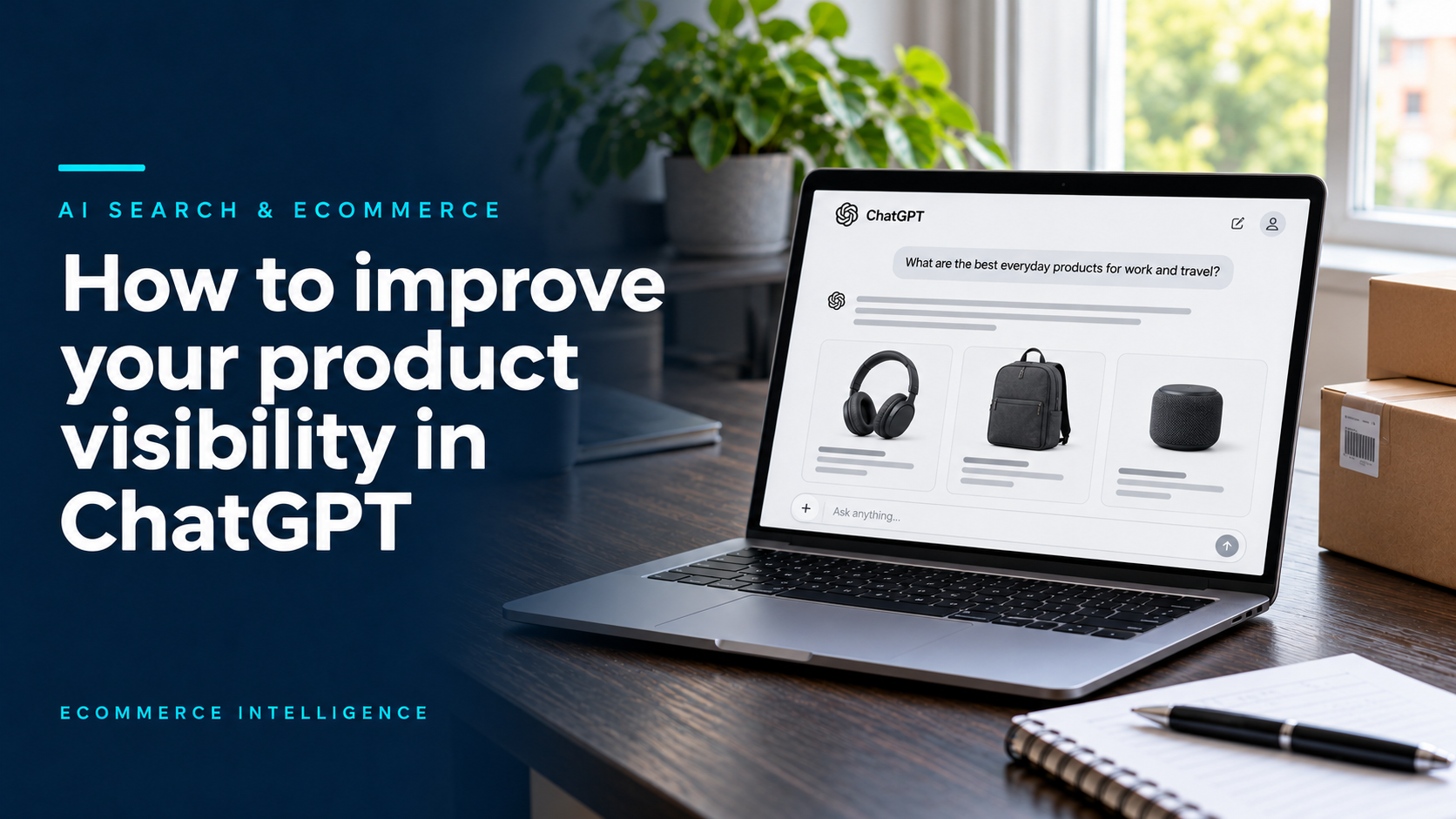

When a shopper asks ChatGPT which product to buy, does your brand appear? If it does, are the details right? Those are useful questions for ecommerce businesses, especially when products are sold through several retailers and the information on each website is different.
Improving your product visibility starts with understanding what shoppers see, checking the information available about your products and correcting gaps that make them harder to compare. This guide focuses on ChatGPT. Amazon Rufus operates within Amazon and needs to be assessed separately.
Check Which Products ChatGPT Recommends
Start with questions a customer might ask before they know which product they want. If you sell coffee machines, try “What is a good coffee machine for a small kitchen?” or “Which coffee machines under £200 are available in the UK?” Each question tests a different buying need.
Build a small set of questions around the reasons people choose your products. Budget, size, compatibility and intended use are good starting points. Your customer service enquiries and product reviews can help you identify questions that matter to real buyers.
Leave your brand name out of these initial checks. Asking about a named product can help you check how it is described, but it will not show whether ChatGPT introduces that product when the shopper has no particular brand in mind. Keep branded and unbranded questions separate.
Record the exact question, date and answer in a spreadsheet. Note the model or mode where shown, whether web search was used and the market you specified. Keep the testing conditions consistent: memory, custom instructions and previous messages may affect the response.
Record what actually appeared. A passing brand mention, a product recommendation and a link to your website are different outcomes. Note product cards separately from the written answer, and keep any source links so you can inspect the pages being cited. A citation identifies a source shown in that response; it does not reveal every factor behind the recommendation.
Compare Your Product Information Across Retailers
If your products are stocked by several retailers, compare their listings with your own product pages. Retailers may be working from different versions of a product feed or specification sheet. Details can also become outdated when a product range or bundle changes.
Imagine a cordless vacuum sold with either one battery or two. Your website distinguishes the bundles clearly, but one retailer uses the same description for both. Another has the correct model number but does not explain which accessories are included. A customer comparing the listings cannot easily tell whether the prices cover the same product.
Check product names, model numbers, sizes, specifications and included accessories. Review price and stock information too, allowing for legitimate differences between retailers. A lower price is not necessarily an error, and two similar-looking listings may represent different packs or variants.
Prioritise discrepancies that could affect a buying decision. Missing compatibility details or an incorrect capacity matter more than minor differences in wording. Keep a record of the affected page, what is wrong and the correct information, then ask the retailer to update it. Make sure your own pages are accurate first.
OpenAI’s guidance explains that shopping results can draw on product information from first-party and third-party providers, alongside other content. It also notes that updates to prices and shipping terms may take time to appear. Correcting a listing is useful work, but it does not mean every AI response will change immediately.
Improve Content That Helps Shoppers Choose
Use the gaps you find to improve the information customers need. If buyers regularly ask whether a product works with a particular device, include the compatible models on the relevant page. If dimensions affect where it can be used, give measurements and explain any space requirements.
Be specific about differences between versions. A short comparison of capacity, materials, accessories or intended use can be more useful than several paragraphs of general sales copy. Product descriptions should make it easy to understand what is being sold and who it suits.
Share current specifications, images and product identifiers with retailers where you can. If a retailer has omitted a useful detail, provide the correction clearly rather than sending an entire catalogue and expecting them to find it. Keep a dated record of requested changes so you can check whether they have been made.
Customer reviews and independent coverage can help buyers assess claims beyond your own description. Read them for recurring questions, misunderstandings and practical experiences. Address gaps on your product pages where appropriate, and use accurate evidence for any claims you make.
There is no guaranteed wording that makes ChatGPT recommend a product. Clear information supports comparison and helps customers understand what they are buying. It should also stand up to scrutiny when someone follows a link and checks the details themselves.
Track Visibility with Consistent Checks
Repeat your original questions under similar conditions and retain the answers. A fresh conversation helps avoid carrying over the previous exchange, although memory and custom instructions still need to be considered. Record any change in testing conditions instead of treating unlike results as a direct comparison.
Look for patterns across several checks. Are relevant products appearing more often? Are their specifications accurate? Which competing products and source pages recur? These observations are more useful than treating one favourable answer as a fixed position in a ranking table.
Keep a separate record of changes to your product pages and retailer listings. This gives you a timeline to compare with your observations, without assuming that an edit caused a particular recommendation. Review measurable referral visits, enquiries and sales alongside visibility checks, while keeping the limits of attribution in mind.
Chris explains the connection between retailer coverage and AI product discovery in the video below.
Ecommerce Intelligence’s Retail Landscape and AI Visibility audit brings these checks together. We review retailer coverage, product information, pricing, availability and how brands appear in agreed AI shopping questions, then identify practical priorities. The result is a clearer picture of where your products are represented accurately and where information needs attention.