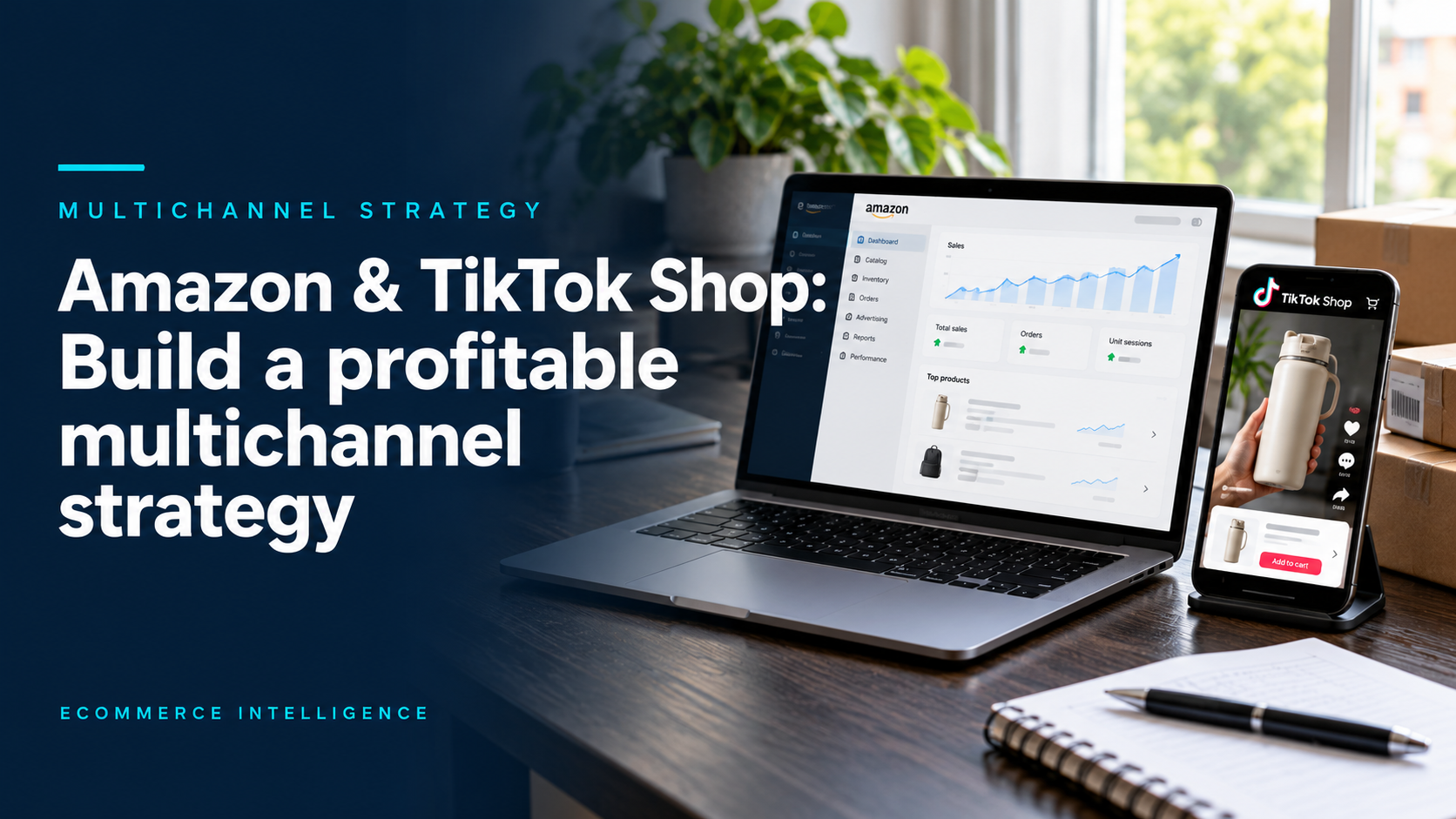

Amazon and TikTok Shop are both great sales channels, but that doesn’t mean you should approach them in exactly the same way. What sells well on Amazon might not be the right product to start pushing on TikTok, while the costs involved on each can also differ significantly.
But before pouring more money or stock into either marketplace, it makes sense to look at the two side by side. That means deciding which products you’re going to focus on, checking the margins properly and then making sure you’ve actually got enough stock and fulfilment capacity for when sales do start to take off.
Choose the Right Products for Each Channel
Some products are naturally going to have more potential on TikTok Shop than others. Something that can be demonstrated quickly, for example, gives creators far more to work with than a product that takes five minutes just to explain. But even with that in mind, whatever you’re selling still needs to have enough margin behind it to make the numbers work.
That’s to say, don’t automatically feel like you need to put your entire Amazon catalogue onto TikTok Shop all in one go. If you’re currently selling 50 products, you might initially choose three or four where the demand, margin and content potential all look promising. You can then see what actually sells before adding more.
Obviously, you need to be able to keep those products in stock and fulfil the additional orders as well. And once you’ve decided what you’re launching, our TikTok Shop SEO guide looks specifically at how to get those products found.
Plan Pricing and Margins Across Both Marketplaces
While the selling price might be similar across Amazon and TikTok Shop, what you actually make from each sale can be quite different. Amazon fees and advertising need to come into the mix, while on TikTok you could also be paying creator commission or using discounts to help get a product moving.
Then you’ve still got fulfilment and possible returns to account for on both sides.
You need to accurately work this out for each product and each marketplace rather than relying on the overall revenue figures. A product doing £20,000 in sales isn’t necessarily performing better than one doing £10,000 if you’re spending considerably more on advertising, commissions and discounts to generate those orders in the first place.
Coordinate Stock and Fulfilment Before Scaling
Running promotions across both marketplaces can put pressure on your stock pretty quickly, especially if the same products are selling through Amazon and TikTok Shop. Make sure you know how much inventory is available and what you’ve already committed to upcoming campaigns before you start trying to increase demand.
Order handling and customer service need to be able to cope with that increase as well. There’s very little point in having a TikTok campaign take off if you suddenly can’t get the orders out or end up running short on Amazon.
Where this matters most is when the same product is being promoted on both marketplaces at the same time. A planned Amazon promotion is relatively easy to account for, but for TikTok, demand can be much harder to predict if a creator video suddenly starts getting traction. You need enough visibility over your inventory to know when to keep pushing and when it might be sensible to pull back before stock becomes a problem.
Plan your stock and fulfilment around both channels, then scale the promotions when you know the operation can actually support them and you won’t be left high and dry.
Connect Amazon Advertising with TikTok Creator Activity
If you’re advertising a product on Amazon at the same time as putting it in front of TikTok creators, it makes sense for the teams involved to know what the other’s doing. You might have a promotion planned for later in the month, for example, or be about to put considerably more creator activity behind a particular product. So having one campaign calendar makes perfect sense and can make things a lot easier to manage.
There’s useful information to share between the two as well. If people keep asking creators about a particular feature, that might be something worth looking at more closely on Amazon. Likewise, what you’re already learning about products on Amazon can help when deciding where to focus your TikTok activity.
That doesn’t mean the advertising itself should be the same. TikTok content still needs to work as TikTok content.
And if Amazon sales happen to increase while a creator campaign is running, be careful about automatically giving TikTok the credit. You need something more than the timing alone to show that one actually drove the other.
Measure Profitability Across Both Channels
Revenue can look great on either marketplace, but obviously that doesn’t tell you how much you’re actually making. A product generating plenty of TikTok Shop sales might also have a fairly hefty creator and advertising cost behind it, while the numbers can look completely different for the same product on Amazon.
So, look at contribution profit alongside the sales. Factor in what you’ve spent on advertising and creators, the returns you’re getting and whether you’ve actually been able to keep the product in stock.
Having those numbers together gives you a much better idea of what’s worth continuing with. Some products might justify more stock or budget, while others may need changing or simply aren’t making enough money to keep pushing.
When Should You Use an Amazon and TikTok Agency?
There may come a point where managing Amazon and TikTok Shop separately just doesn’t make sense. This is particularly true when you’re spending across both and need your TikTok Shop agency and full service Amazon agency activity planned around the same products and commercial priorities.
If you’re already selling on both, or planning to, speak to Ecommerce Intelligence about where you want to take them next.